



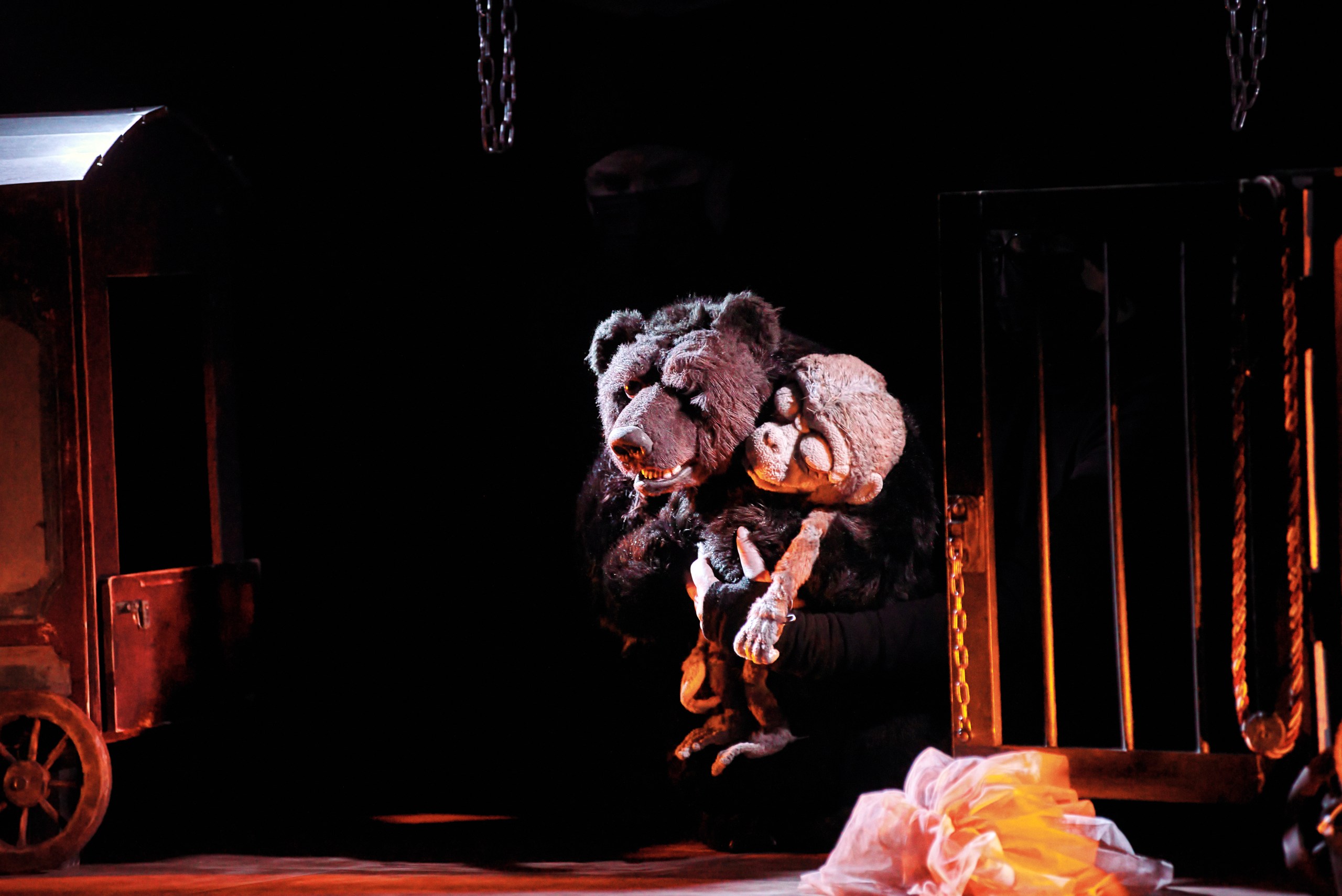
Performed on the second day of the 5th Novi Sad Theatre Festival, the production Don’t Poke the Bear by Tel Aviv’s Key Theatre, starring Dikla Katz and Avi Zlicha, is a story about justice — justice for the oppressed, the downtrodden, and the humiliated. It is also a story about violence in all its forms, especially violence against the weak, whether animals locked in circus cages or women. At the same time, the Israeli production speaks of tenderness and solidarity struggling against the arrogance and brutality of the world’s established order.
From its very first moments, the performance provokes discomfort and dread, followed by anger and solidarity — powerful emotions in every sense — all the more because it delivers a very strong message, one that does not follow the Christian principle of ‘turn the other cheek.’ Quite the opposite.
So far, the Israeli artists have performed the play in several countries: Croatia, Bulgaria, Slovakia, Romania twice, Hungary, and even South Korea. In the discussion held after the performance, we learned that Don’t Poke the Bear was created before the Covid pandemic — one of the dramatic turning points in all our lives — after which, for them, new dramatic turning points followed, as the artists said, referring to the ongoing war in that part of the world.
They stopped performing the play after the massacre that took place on October 7, 2023, at the Supernova music festival near Re’im. This festival performance was the first staging of the production after a two-year hiatus. Dikla Katz and her stage partner, co-author and performer Avi Zlicha, had returned from Romania the night before the massacre, where they had performed this very production at a festival. They revealed that the events of October 7 have bound Don’t Poke the Bear to especially strong and turbulent emotions for them. We also spoke about audience reactions in different countries where the play was performed, as well as the age recommendations for viewers, which varied from country to country. Co-author, actress, performer, and puppeteer Dikla Katz spoke about all of this.
Your performance evokes very strong emotions. Can one speak of different reactions depending on the audience’s age, or perhaps on the countries where you performed it?
It’s interesting that everywhere we performed the play, the recommended age was 12 and above. Only in Korea, because of the way we approached the subject matter, the age recommendation was 14+, and some even said it should be 16+, simply because the culture is different there.
Our play deals with basic human emotions, with humanity itself, with emotions every person can identify with. It speaks about confronting evil, about violence against women. Every age group recognizes something in it that belongs to their own experience. For example, one of my close friends from Israel came to see the play with her son, who was ten at the time. I was very worried and uneasy because the subject is difficult, and I was concerned about how he would react to all the disturbing things happening in the play. But afterward, when we talked to him, he told us that he already knew about such acts of violence because he reads books and watches television.
That was when I realized that children may cope with difficult subjects — such as violence — better than we think they do. Children are exposed to all kinds of content, including violent content. Still, I believe we should protect them from all of that as much as possible. In short, younger children see in our play the struggle of animals against their oppressors; women recognize the fight against violence toward women; everyone sees, from their own perspective, what touches them as human beings.
You said earlier that you have very strong emotional ties to this production, both because of the horrific events of October 7 and because you created it during Covid. What was it like performing it again after two years? With what emotions did you step onto the stage, and what emotions remained afterward? Are those emotions still turbulent?
Before October 7, we performed it very often, but afterward we did not want to travel to festivals because the reality in Israel was extremely difficult, emotionally and physically. Festivals are places where life and art are celebrated, and we simply could not celebrate. After the events of October 7 and the hostage-taking, it became very difficult to continue living normally without feeling emotionally shattered.
Coming to Novi Sad and performing this play again feels, for me, like awakening a new kind of hope. And this is not mere politeness — it is an opportunity to meet people again, friends we made during our first visit here. Terrible things have happened, but life goes on. For me, simply boarding a plane from Tel Aviv to Novi Sad already felt like a success.
In the play, violence is punished with violence. How and why did you decide to present it that way? We witness the killing of the abuser on stage by someone who has long been oppressed. Justice rarely happens in real life, yet you felt the need to establish it within the play.
At the end of the play, after all the horrible things we have witnessed — everything done to Max the bear and Tina, the star of the show — we felt it was only just for the story to end that way.
Some people believed that killing the tormentor at the end was wrong because the audience would then lose empathy for someone who had previously been a victim. Others felt differently — that there had to be punishment. For us, this story is an allegory, a story about humanity, not just about a circus.
We discussed it a great deal and came to the conclusion that we wanted to say that if a human being commits terrible acts, there is a price to pay. When you do evil, you must be ready to face the consequences.
In fact, everyone pays in the end. The victims pay — Tina the monkey and Max the bear — but so does the abuser, the circus manager, a cruel and ruthless man who stole freedom from others and terrorized everyone around him.
The bear tried to stand on the side of the weaker, oppressed one; he tried to protect the woman — because our story is also a story about a woman and violence against her. Our heroine is named Tina, inspired by the life of Tina Turner and the abuse she endured.
The bear loses his sight, symbolically, but he also loses his freedom, because he will never again be wild and free; he will remain in the circus for the rest of his life. Tina — the diva and star — is old and tired, exhausted by life. Those were the prices that had to be paid.
Već od prvog momenta, predstava izaziva jezu i nelagodu, a onda bes i solidarnost, jake emocije, u svakom slučaju, tim pre što šalje i vrlo snažnu poruku, koja se ne vlada po hrićanskim merilima oličenim u izreci "Ko tebe kamenom, ti njega hlebom". Naprotiv...
Do sada su je izraelski umetnici igrali u više zemalja, u Hrvatskoj, Bugarskoj, Slovačkoj, dva puta u Rumuniji, Mađarskoj, čak u Koreji... U razgovoru, koji je sa njima upriličen posle novosadskog izvođenja, saznali smo da su “Ne zadirkuj medveda" kreirali pre kovida - jedne od dramatičnih tačaka života svih nas, posle koje su - za njih - usledile nove dramatične tačke, rekli su umetnici, referišući se na ratni sukob koji traje u tom delu sveta.
Predstavu su prestali da igraju posle masakra koji se dogodio 7. oktobra 2023. godine, na muzičkom festivalu "Supernova" u blizini Reima i ovo izvođenje u Novom Sadu bilo je prvo izvođenje predstave nakon dve godine. Dikla Kac i njen scenski partner, koautor predstave i performer Avi Zliha, noć pre masakra vratili su se iz Rumunije, gde su baš ovu predstavu igrali na jednom tamošnjem festivalu. Otkrili su da ih upravo zbog tog događaja za "Medveda" vežu vrlo snažne i turbulentne emocije, a saznali smo ponešto i o reakcijama na predstavu u odnosu na geografije u kojima se igrala, te o uzrastu publike koji je, od zemlje do zemlje, bio predviđen da gleda predstavu. O svemu tome govorila je koautorka predstave, glumica, performerka, lutkarka Dikla Kac...
Vaša predstava izaziva vrlo jake emocije... Može li se govoriti o različitim reakcijama na nju u odnosu na uzrast koji je gleda ili pak na geografije u kojima ste je igrali?
Zanimljivo nam je da je svugde gde smo je igrali starosna granica za gledanje bila 12 godina i više, samo je u Koreji - zbog načina kako smo tretirali temu o kojoj predstava govori, starosna granica bila 14 i više godina, a govorilo se da bi trebalo da bude i 16 i više godina, prosto zato što je kultura je drugačija. Naša predstava govori o bazičnim ljudskim emocijama, o humanosti, o emocijama s kojima se svaki čovek može poistovetiti. Ona govori o suprostavljanju zlu, o nasilju nad ženama. Svaki uzrast u njoj prepoznaje ono što pripada njegovim godinama. Npr. jedna moja dobra prijateljica iz Izraela došla je na predstavu sa sinom koji je u tom trenutku imao 10 godina. Bila sam jako uplašena i uznemirena, jer je tema teška, brinula sam kako će reagovati na sve te grozne stvri koje se događaju u predstavi, ali posle predstave, kada smo razgovarili s njim, on nam je rekao da zna za sve te momente nasilja koji se dešavaju, jer čita knjige i gleda TV. Tada sam shvatila da se deca možda bolje nose s tim teškim temama, npr nasiljem, od onoga kako mi mislimo da ih oni doživljavaju. Deca su izložena raznim sadržajima, pa i nasilnim. Svejedno mislim da bismo morali da ih zaštitimo od svega toga. Ukratko, manja deca u našoj predstavi vide borbu životinja protiv ugnjetača, žene vide borbu protiv nasilja nad ženama, svako ih svog ugla vidi ono što ga dira kao ljudsko biće.
Rekli ste u razgovoru da vas vežu vrlo snažne emocije za ovu predstavu u kontekstu užasnog događaja od 7. oktobra, ali i kovida u kojem ste je stvarali. Kako je bilo igrati je posle dve godine pauze, s kakvim emocijama ste stali pred publiku na sceni, a kakvim nakon predstave? Da li su emocije i dalje turbulentene?
Pre 7. oktobra mnogo smo je igrali, a nakon 7. oktobra nismo hteli da putujemo na festivale jer je realnost u Izraelu bila vrlo teška, emocionalno i fizički. Festivali su mesta gde se slavi život i umetnost, a mi nismo mogli da slavimo, jer je posle kidnapovanja ljudi bilo vrlo teško nastaviti s normalnim životom, a ne biti emotivno skršen. Dolazak u Novi Sad, gde ponovo igramo ovu predstavu za mene je buđenje neke nove nade, i nije to kurtoazija što ću reći, ovo je prilika da sretnemo ljude, prijatelje koje smo upoznali prilikom prvog dolaska ovde. Grozne stvari su se desile, ali život se nastavlja. Za mene je uspeh bilo već to što smo poleteli iz Tel Aviva ka Novom Sadu.
U predstavi se nasilje kažnjava nasiljem. Kako i zašto ste odlučili da to postavite tako? Prisustvujemo ubistvu nasilnika na sceni, ubija ga do tada mnogo i dugo tlačeni. Pravda se retko događa na zemlji, vi ste imali potrebu da je uspostavite u predstavi...
Na kraju predstave, posle svih strašnih stvari koje smo videli, koje su počinjene protiv medveda Maksa i Tine - zvezde šoua, mislili smo da je pravično da se predstava tako završi. Ubijanje mučitelja na kraju, neki ljudi smatrali su da nije dobro, jer onda gledalac neće imati empatiju za nekoga ko je do tada bio žrtva. Drugi ljudi su mislili drugačije, da mora biti kazne. Za nas je ova priča alegorija, priča o humanosti, a ne samo cirkus. Razgovarali smo i došli do zaključka da želimo da kažemo da, ako ljudsko biće čini grozne stvari, onda postoji cena koju mora da plati. Kad činiš zlo, moraš biti spreman da snosiš posledice. Zapravio, svi na kraju moraju da plate, i plate svi: i žrtve - majmunica Tina i medved, i nasilnik - menadžer cirkusa, surovi i okrutni čovek koji je otimao slobodu drugima i terorisao sve oko sebe. Medved je pokušao da stane na stranu slabijeg, potlačenog, pokušao je da zaštiti ženu – a naša priča je i priča o ženi, nasilju nad njom. Naša junakinja zove se Tina i inspirisana je životom Tine Tarner i nasiljem koje je ona preživela. Medved je izgubio vid, što je simbolično, a izgubio je i slobodu, jer nikad više neće biti divlji, slobodan, ostaće u cirkusu do kraj života, dok je Tina - diva i zvezda - stara i umorna, iscrpljena životom. To su cene koje su se morale platiti...
Snežana Miletić